Modern Turbo Engines Are Creating Bigger Risks for Used Car Buyers
A few years ago, turbocharged engines were mostly associated with sports cars and luxury performance models. Today, they are everywhere.
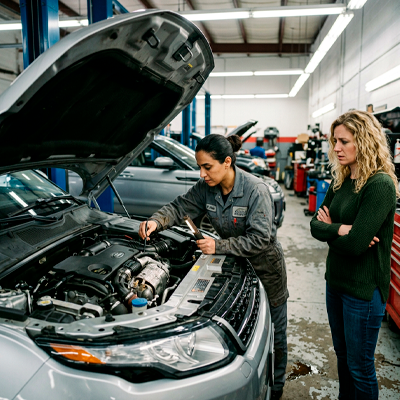
Compact SUVs, family sedans, small crossovers, and even economy hatchbacks now come equipped with small turbo engines designed to improve fuel economy while maintaining decent power. On paper, the idea sounds perfect. Drivers get stronger acceleration without needing a large V6 engine that burns more gas.
For new car buyers under warranty, that usually works fine.
But in the used car market, many turbocharged vehicles are creating repair costs that buyers never expected when comparing monthly payments. A used SUV that seems like a bargain at $17,000 can quietly become far more expensive than a naturally aspirated alternative that initially looked “less exciting.”
A growing number of mechanics are noticing the same pattern. People buy modern turbo cars for fuel savings, then lose those savings later through maintenance and repair bills.
Small turbo engines often work harder than drivers realize
One reason turbocharged engines became popular is efficiency regulations.
Automakers discovered they could replace larger engines with smaller turbocharged versions while still advertising competitive horsepower numbers. A modern 1.5-liter turbo engine can sometimes produce similar power to an older naturally aspirated 2.5-liter engine.
The tradeoff is stress.
Smaller turbo engines frequently operate under higher pressure and heat levels, especially during highway merging, towing, climbing hills, or aggressive acceleration. Over time, those conditions increase wear on multiple components.
Turbochargers themselves spin at incredibly high speeds. Some exceed 150,000 RPM under load. That level of stress means oil quality and maintenance intervals become far more important than many drivers realize.
Skipping oil changes on older naturally aspirated engines might cause gradual wear. On turbo engines, poor maintenance can accelerate expensive failures surprisingly fast.
That becomes a major issue in the used car market because buyers rarely know how carefully previous owners maintained the vehicle.
Used turbo vehicles can hide expensive repair risks
A turbocharged vehicle may drive perfectly during a short test drive while still carrying hidden mechanical problems.
Carbon buildup is one example many buyers overlook.
Several direct-injection turbo engines gradually accumulate carbon deposits on intake valves, especially after 60,000 to 100,000 miles. Drivers may notice rough idle, weaker acceleration, reduced fuel economy, or cold-start misfires.
Cleaning those deposits is not always cheap.
Depending on the engine, a professional walnut blasting service can cost between $400 and $1,200, and many buyers never budget for it because they do not even know the issue exists.
Turbocharger replacement costs are even worse.
On some European models, replacing a failed turbo can easily exceed $2,500 to $4,000 once labor and supporting parts are included. Even mainstream brands sometimes produce repair bills above $1,800 for turbo-related issues.
The frustrating part is that many of these problems appear shortly after warranty coverage expires.
A low monthly payment can hide extremely high ownership costs later.
Fuel savings are not always as impressive in real driving
Turbocharged engines are marketed heavily around efficiency.
Under ideal conditions, many of them genuinely achieve strong MPG numbers. The problem is that real-world driving rarely matches laboratory testing.
Drivers who accelerate aggressively often push turbo engines into boost pressure frequently, which increases fuel consumption dramatically. In some SUVs and crossovers, real-world MPG ends up surprisingly close to older naturally aspirated alternatives.
That changes the ownership equation completely.
A driver may accept additional mechanical complexity expecting major fuel savings, only to discover they save perhaps $25 to $40 monthly compared to a simpler engine.
Meanwhile, repair risks increase significantly.
This becomes even more noticeable with used luxury vehicles. Older turbocharged German SUVs often appear affordable on the secondhand market because depreciation drops prices quickly.
Buyers see a premium vehicle for the price of a newer economy crossover and assume they found a smart deal.
What they often bought instead was luxury repair costs attached to an aging high-pressure engine system.
Transmission stress creates another hidden problem
Many smaller turbocharged vehicles rely on transmissions that constantly work to maximize efficiency.
CVTs and smaller automatic gearboxes are frequently paired with turbo engines to keep RPM low and improve fuel economy ratings. Unfortunately, some combinations age poorly under heavy use.
This becomes especially problematic for drivers who:
- Carry passengers frequently
- Drive in mountainous areas
- Tow small trailers
- Spend hours in stop-and-go traffic
- Use aggressive acceleration regularly
A compact turbo SUV may feel powerful during a test drive, but long-term drivetrain durability often depends heavily on driving habits.
Some owners experience transmission issues well before 120,000 miles. Others never have major problems at all.
That inconsistency makes used turbo vehicles difficult to evaluate because two identical models may age completely differently depending on how they were driven.
Naturally aspirated engines still make sense for many buyers
Turbocharged vehicles are not automatically bad purchases.
Many modern turbo engines perform extremely well when maintained properly. Drivers who lease vehicles, trade cars every few years, or follow strict maintenance schedules may never experience serious problems.
But buyers planning to keep a used vehicle long-term should think differently.
For people prioritizing reliability over excitement, naturally aspirated engines still offer advantages that many shoppers underestimate:
- Simpler engine design
- Lower heat stress
- Fewer expensive components
- Cheaper long-term repairs
- More predictable maintenance
- Better tolerance for imperfect maintenance history
This is one reason older Toyota and Honda models with non-turbo engines still hold strong resale value despite having lower horsepower numbers.
Buyers trust simplicity.
That trust matters more after 100,000 miles than it does during a dealership test drive.
The smartest used car purchase is often the less impressive one
A lot of used car buyers shop emotionally first and financially second.
Turbocharged vehicles feel fast, modern, and refined during short drives. Naturally aspirated alternatives can seem boring by comparison.
But ownership costs usually become clear long after the excitement fades.
One mechanic described it perfectly. He said many drivers shop for horsepower but end up living with repair invoices instead.
That is especially true when buyers stretch their budget to afford a newer turbocharged model while ignoring maintenance reserves completely.
A reliable car with slightly slower acceleration often creates less financial stress than a powerful vehicle that constantly threatens expensive repairs.
The hidden danger with many modern turbo vehicles is not immediate failure. It is gradual ownership fatigue. Repeated repairs, premium fuel requirements, oil consumption concerns, carbon cleaning, and drivetrain issues slowly wear owners down financially.
And by the time many drivers realize the cheaper-looking vehicle was actually the more expensive decision, selling it usually means taking another financial loss.