Used German Luxury Cars Can Quietly Drain Your Budget
Scrolling through used car listings can become dangerous very quickly.
Someone starts looking for a reliable daily driver and suddenly finds a luxury sedan that originally cost $70,000 selling for less than a new economy car. The photos look incredible. Leather seats, panoramic roof, premium sound system, turbocharged engine, ambient lighting, smooth design — everything feels far above its price range.
That low price creates a powerful illusion.
Many buyers think they discovered a hidden bargain when they are actually stepping into one of the most expensive ownership experiences in the used car market. Old German luxury cars often become cheap for a reason, not by accident.
The purchase price drops aggressively over time, but the maintenance costs usually do not follow the same path.
Repair bills stay expensive even after depreciation
One of the biggest mistakes buyers make is assuming repair costs shrink with resale value.
They rarely do.

A 10-year-old luxury sedan may sell for $14,000 today, but many of its parts were engineered for a vehicle that originally competed in the premium market. Labor remains specialized. Electronics remain complicated. Suspension systems remain expensive.
That creates situations where relatively normal repairs become financially painful.
A used luxury SUV with adaptive suspension might need:
- $2,500 to $4,000 for suspension repairs
- $1,200 for premium brake replacements
- $900 for electronic module issues
- $400 tires that wear faster than expected
For someone used to maintaining a simple commuter car, these numbers feel absurd.
The frustrating part is that many repairs do not arrive one at a time. Older luxury vehicles often develop clusters of issues because aging electronics, seals, sensors, and cooling systems start failing around similar mileage ranges.
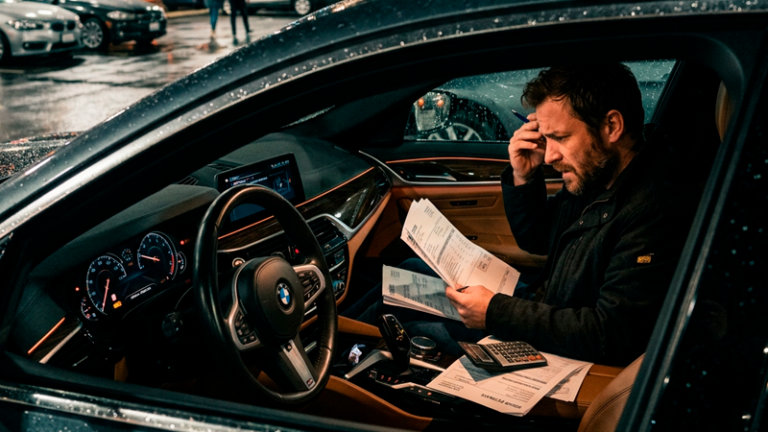
A buyer who expected “minor maintenance” suddenly spends $6,000 during the first year.
Luxury features become liabilities with age
Premium cars sell through comfort and technology.
That same technology becomes a problem years later.
Power trunk systems, motorized seats, adaptive headlights, digital dashboards, soft-close doors, air suspension, turbo systems, and complex infotainment setups all add convenience when the car is new. After eight or ten years, those features become additional failure points.
Many older luxury cars do not fail mechanically first. They fail electronically.
This catches people off guard because the vehicle may still drive perfectly while small systems start malfunctioning constantly.
A driver may deal with:
- Random dashboard warnings
- Infotainment freezes
- Battery drain issues
- Parking sensor failures
- Cameras stopping intermittently
- Window regulators breaking
- Keyless entry problems
None of these problems completely disable the vehicle, but they slowly transform ownership into an exhausting experience.
Some owners begin ignoring warning lights simply because fixing everything becomes unrealistic financially.
Cheap financing creates expensive monthly ownership
A lot of buyers focus heavily on monthly payments.
That creates another trap.
An older luxury sedan financed over 72 months may appear affordable because depreciation already crushed the sale price. Someone sees a payment close to $280 per month and assumes the car fits comfortably inside their budget.
Then the hidden monthly costs appear:
- Premium fuel every week
- Higher insurance rates
- Expensive oil services
- Unexpected repair funds
- Performance tires
- Registration costs in some states
Suddenly the real ownership cost feels closer to a much newer vehicle.
One overlooked issue involves downtime. When cheaper cars break, repairs are often fast because parts are common and mechanics see those models constantly. Luxury imports sometimes wait days or weeks for specialized parts.
That creates secondary expenses people rarely calculate initially.
Rental cars.
Missed work.
Ride-share costs.
Delivery fees.
A single repair visit can quietly affect an entire month financially.
Mileage matters less than maintenance history
A lot of inexperienced buyers obsess over low mileage.
That can become dangerous with luxury vehicles.
A poorly maintained German car with 55,000 miles may easily become riskier than a properly maintained one with 110,000 miles. Service history matters enormously because these vehicles often require strict maintenance schedules to stay reliable long-term.
Skipping fluid services, delaying cooling system repairs, or ignoring transmission maintenance can create catastrophic failures later.
A thick folder of maintenance records is often worth more than low mileage alone.
This is why some older luxury cars survive beautifully for years while identical models become disasters. Ownership habits matter heavily in this category.
Buyers chasing the cheapest listing online usually ignore this completely.
Some luxury brands age far worse than others
People often group all luxury vehicles together.
That is a mistake.
Certain models develop reputations for durability, while others become infamous for chronic reliability problems after warranty coverage ends. Researching specific engines and transmission combinations matters far more than simply researching the brand itself.
For example, some turbocharged engines become known for:
- Oil consumption problems
- Timing chain failures
- Cooling system leaks
- Carbon buildup
- Expensive turbo replacements
Meanwhile, naturally aspirated engines from similar years may survive much longer with basic maintenance.
One small engine choice can completely change ownership costs over five years.
This becomes especially important because many luxury buyers purchase emotionally first and research reliability afterward.
That order usually leads to regret.
The social image rarely matches the financial reality
A lot of people buy luxury vehicles because of the image attached to them.
That feeling wears off surprisingly fast once repair invoices start arriving regularly.
Someone may feel proud parking a luxury coupe outside restaurants or posting photos online during the first months. After enough maintenance problems, the car slowly becomes associated with stress instead of status.
There is also a hidden financial issue many people overlook.
When buyers stretch their budget to afford older luxury vehicles, they often cannot comfortably afford proper maintenance anymore. That leads to delayed repairs, cheap aftermarket parts, ignored warning signs, and declining reliability.
Eventually the vehicle loses the smooth, refined experience that made it attractive initially.
A poorly maintained luxury car often feels worse than a properly maintained economy car.
That realization usually arrives late.
A smarter approach often saves more money long-term
People who enjoy luxury cars are not automatically making bad decisions.
The smarter buyers usually approach the market differently.
Instead of chasing the absolute cheapest luxury model available, they search for:
- Lower ownership complexity
- Proven engines
- Strong maintenance history
- Reasonable repair availability
- Predictable long-term costs
Some buyers even intentionally choose “less impressive” trims because simpler configurations reduce future repair risks dramatically.
That approach may feel less exciting during the shopping phase, but it usually feels much better three years later.
The biggest cost of an old luxury car is rarely the purchase price. It is the moment the owner realizes they cannot comfortably maintain the lifestyle the vehicle requires.