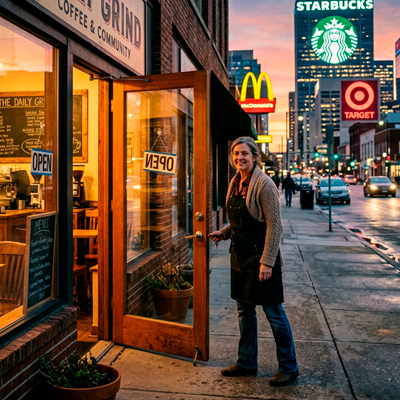
Small Local Businesses Are Quietly Winning Against Large Chains Again
For years, it felt almost impossible for small businesses to compete with massive national brands.
Large chains had bigger advertising budgets, lower supplier costs, professional marketing teams, and enough scale to survive mistakes that would bankrupt smaller companies.
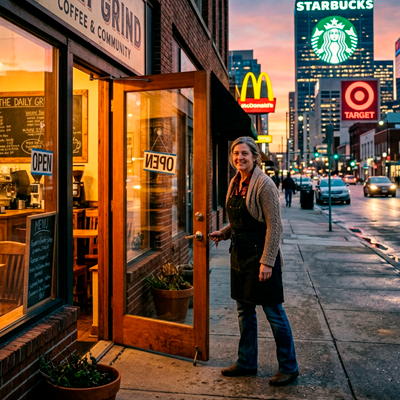
A local business owner making one bad financial decision could lose everything.
Meanwhile, giant retailers could survive months of poor performance without customers even noticing.
But something unexpected has started happening across several industries in the United States.
Small businesses are quietly rebuilding advantages that many people assumed disappeared forever.
Not because they suddenly became bigger.
Not because they discovered magical marketing tricks.
And definitely not because running a small business became easier.
In many cases, it actually became harder.
Commercial rent increased.
Digital advertising costs exploded.
Insurance became more expensive.
Hiring reliable workers became frustratingly unpredictable.
Yet despite all of that, thousands of smaller companies are slowly outperforming larger competitors in areas that matter most to customers.
Especially in industries where people became exhausted by automation, poor customer service, and generic corporate experiences.
A surprising number of consumers are now willingly paying higher prices just to avoid dealing with giant companies that feel disconnected from real people.
That shift is creating opportunities most business owners are still underestimating.
Customers Started Valuing Human Interaction Again
A few years ago, convenience seemed unbeatable.
People accepted:
- self-checkout everywhere
- endless automated phone systems
- customer service chatbots
- delivery mistakes
- outsourced support teams
- impossible refund processes
At first, many consumers tolerated those frustrations because prices felt lower and speed felt more important.
But over time, something changed.
Customers became emotionally exhausted by businesses that felt impossible to communicate with.
A restaurant owner who remembers a customer’s name now creates a stronger impression than a national chain spending millions of dollars on advertising campaigns.
A local mechanic explaining repairs honestly often builds more trust than dealerships pushing confusing financing packages.
People increasingly remember how a business makes them feel, not just how cheap it is.
That matters more than many large companies expected.
Especially after years of reducing human interaction in order to cut operational costs.
Consumers notice when:
- employees look overwhelmed
- stores feel understaffed
- customer support feels scripted
- refunds become difficult
- policies feel intentionally confusing
And once trust disappears, even aggressive discounts stop fixing the problem.
Many customers now prefer paying slightly more for businesses that feel transparent, calm, and human.
That emotional shift is becoming a major competitive advantage for smaller companies.
Large Companies Accidentally Created Openings For Smaller Competitors
One of the biggest misconceptions in business is believing large companies automatically understand customers better.
Sometimes scale creates the opposite effect.
As corporations grow, decision-making often becomes slower, more disconnected, and heavily focused on quarterly numbers.
Managers become obsessed with:
- reducing labor costs
- increasing automation
- shortening customer interactions
- maximizing subscriptions
- reducing refunds
- increasing upsells
Those strategies may improve short-term revenue reports.
But they also create frustration that slowly damages brand loyalty.
A local coffee shop owner noticing that customers hate waiting 15 minutes for mobile app pickups can immediately change operations the next day.
A national chain may take six months, multiple meetings, and approval from several departments just to test the same adjustment.
That speed difference matters.
Small businesses can adapt faster because fewer people are involved in the decision.
Fast adaptation quietly became one of the most valuable business advantages in modern markets.
Especially after consumer behavior started changing more rapidly after 2020.
Businesses capable of adjusting quickly now survive problems that destroy slower competitors.
And many small companies are finally learning to use that flexibility intelligently.
The Financial Pressure Behind Big Corporate Growth Became Obvious
Many consumers once believed giant companies were naturally more stable.
But recent years exposed how fragile some large business models actually became.
Several major retailers expanded aggressively using debt, oversized real estate investments, and unrealistic growth expectations.
That pressure forced many companies into decisions customers immediately noticed.
Prices increased.
Product quality dropped.
Subscription models expanded everywhere.
Customer support became harder to reach.
Employees received less training.
Stores operated with smaller teams.
Meanwhile, smaller businesses often operated differently from the start.
Many local companies stayed conservative because they had no choice.
A family-owned business usually cannot survive reckless expansion mistakes.
That forced discipline accidentally became an advantage later.
Businesses with lower debt and simpler operations handled economic uncertainty far better than many highly leveraged corporations.
Some local businesses now intentionally avoid aggressive expansion because owners watched larger competitors collapse under financial pressure.
That mindset shift became especially common in industries like:
- restaurants
- home services
- auto repair
- boutique retail
- specialty fitness
- independent cafés
Instead of chasing endless growth, many owners started prioritizing:
- stable profit margins
- repeat customers
- lower operational stress
- manageable staffing
- consistent cash flow
Ironically, that slower approach often created healthier businesses.
Social Media Quietly Changed Local Business Survival
Years ago, local businesses depended heavily on expensive advertising.
Today, a small business can build enormous visibility with almost no traditional marketing budget.
But not in the way most people imagine.
Perfect branding is no longer the biggest advantage online.
Authenticity started outperforming polished corporate content in many industries.
Customers respond strongly to businesses that feel real.
A bakery owner casually showing the morning preparation process on TikTok often receives more engagement than highly produced advertisements from major food chains.
A local gym coach filming honest client transformations may build stronger trust than national fitness franchises spending heavily on polished campaigns.
People became tired of content that feels overly manufactured.
That emotional fatigue created opportunities for smaller businesses willing to appear more human online.
And importantly, local companies usually have something giant corporations struggle to replicate.
Real personality.
Real owners.
Real employees.
Real community interaction.
Consumers increasingly support businesses that feel emotionally connected to actual people instead of faceless systems.
That trend became especially powerful among younger customers who grew skeptical of traditional advertising.
Some Small Businesses Still Fail For Predictable Reasons
Not every local company is suddenly thriving.
Many still struggle badly.
But the failures are often surprisingly repetitive.
Some owners still underestimate:
- cash flow management
- tax planning
- labor costs
- pricing strategy
- online visibility
- customer retention
Others make emotional decisions that damage long-term stability.
For example:
- expanding too early
- leasing expensive locations too quickly
- hiring too many employees
- copying competitors blindly
- lowering prices excessively
A common mistake happens when owners focus only on attracting new customers while ignoring repeat business.
That becomes financially dangerous very quickly.
Acquiring a new customer often costs far more than keeping an existing one satisfied.
A business with loyal repeat customers can survive difficult economic periods much longer than businesses constantly chasing new traffic.
Another major issue involves underpricing.
Many small businesses charge too little because owners fear losing customers.
But extremely low pricing often creates different problems:
- lower profit margins
- owner burnout
- poor service quality
- inability to hire help
- constant financial stress
Customers may initially like low prices.
But unstable businesses eventually create worse customer experiences anyway.
Sustainable pricing matters more than many owners realize.
The Businesses Quietly Growing Right Now Share Similar Habits
Across multiple industries, successful smaller businesses often follow patterns that sound surprisingly simple.
They usually focus on:
- reliable customer experiences
- clear communication
- realistic growth
- consistent quality
- manageable operations
- fast problem solving
Not flashy expansion.
Not viral marketing fantasies.
Not pretending to be larger than they actually are.
Many successful owners now intentionally avoid trends that create unnecessary complexity.
Some stopped opening multiple locations.
Others reduced product options.
Some even lowered revenue temporarily just to simplify operations and improve profit margins.
That sounds counterintuitive at first.
But simpler businesses are often easier to manage, easier to scale carefully, and far less emotionally exhausting.
And customers notice the difference.
A business operating calmly and consistently often feels far more trustworthy than companies constantly changing prices, policies, or service quality.
Stability itself quietly became a competitive advantage in modern business.
Consumers increasingly value reliability because so many industries became chaotic, understaffed, and unpredictable.
That creates a major opportunity for smaller companies willing to stay disciplined while larger competitors chase endless expansion.
Not every local business will survive the next decade.
But many people underestimated how strongly consumers would eventually return to businesses that feel personal, trustworthy, and genuinely connected to their communities.
And that shift may still be in its early stages.
FAQ
Are small businesses growing faster again in the United States?
In several industries, yes. Local service businesses, specialty retail shops, and community-focused companies have seen stronger customer loyalty because many consumers became frustrated with impersonal corporate experiences.
Which industries benefit most from this trend?
Industries involving trust, personal interaction, and customer experience tend to benefit most. Examples include restaurants, auto repair, fitness studios, cafés, salons, and home services.
Do small businesses still struggle financially?
Absolutely. Many still face serious pressure from rent, insurance, payroll costs, and advertising expenses. The difference is that some smaller businesses adapted faster than larger competitors.
Why are customers supporting local businesses more often now?
Many consumers became tired of automation, poor support systems, and generic experiences. Businesses that feel more human often create stronger emotional loyalty today.