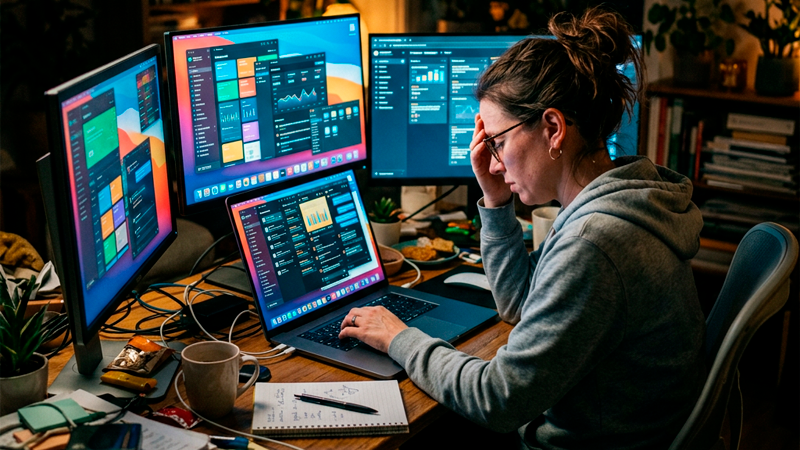
Why Too Many Productivity Apps Quietly Destroy Remote Work Efficiency
Remote workers love productivity apps for the same reason people buy kitchen gadgets. Every new tool promises to save time, reduce stress, and make daily routines feel smoother.
At first, the setup feels exciting. A task manager organizes projects. A note-taking app captures ideas instantly. A communication platform replaces endless emails. Then another tool appears with AI summaries, automation workflows, calendar syncing, or focus tracking.
Six months later, many remote workers realize something uncomfortable.
They are spending more time managing productivity systems than actually producing work.
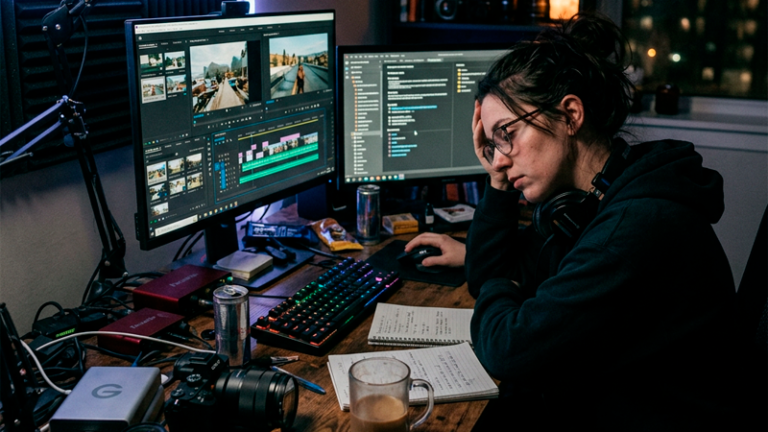
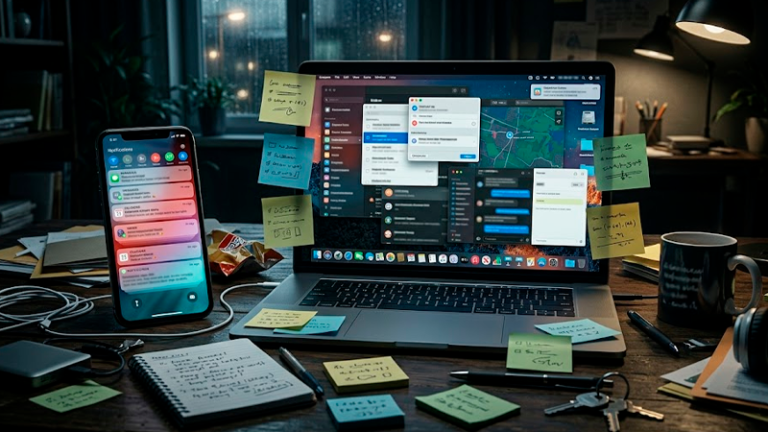
A surprising number of freelancers, creators, startup teams, and remote employees slowly build digital environments that create friction instead of removing it. Notifications multiply, subscriptions stack up, workflows overlap, and simple tasks suddenly require four different apps to complete.
The biggest productivity problem in remote work is often not laziness or lack of discipline. It is digital overload disguised as organization.
Most remote workers underestimate switching costs between apps
One hidden problem with modern productivity tools is context switching.
Opening Slack after checking Notion may feel harmless. Jumping from Google Docs into Trello takes only seconds. Responding to a quick notification inside Discord seems minor too.
But researchers and workplace analysts have repeatedly found that small interruptions create larger mental recovery times than people expect.
A remote worker who switches between applications 40 to 60 times per hour rarely notices the damage in real time. The brain adapts to constant movement, which creates the illusion of efficiency.
The real consequences usually appear later:
- Tasks take longer to finish
- Attention spans shrink
- Work quality becomes inconsistent
- Simple decisions feel mentally exhausting
- Deep work almost disappears entirely
One marketing freelancer reported spending nearly $180 monthly on productivity subscriptions while simultaneously missing deadlines more often than before.
The issue was not motivation. His workflow depended on eleven separate tools that constantly interrupted each other with notifications, updates, reminders, and integrations.
Ironically, the systems designed to improve productivity became the main source of distraction.
Subscription stacking quietly becomes a financial leak
Most digital productivity tools look inexpensive individually.
A project management app costs $8 monthly. A premium calendar costs another $12. AI writing assistance adds $20. Cloud storage adds more. Password managers, automation tools, team chat apps, scheduling platforms, and video software slowly pile on top.
Individually, none of those subscriptions seem dangerous.
Combined together, remote workers can easily spend between $150 and $400 per month on software before realizing how little of it they actively use.
This becomes especially common among freelancers and creators trying to imitate high-performance online entrepreneurs.
People see productivity setups on YouTube or TikTok filled with dashboards, automations, and premium software stacks. What rarely gets mentioned is that many of those creators receive sponsorships, affiliate commissions, or free access.
Regular workers pay the full price.
A simple workflow with fewer tools often produces better results than an expensive digital ecosystem.
One overlooked insight is that every new productivity tool creates maintenance work. Someone must organize files, update templates, rename folders, manage integrations, learn features, and troubleshoot syncing problems.
Those hours rarely appear in productivity discussions, but they still consume energy.
Communication apps create invisible pressure during remote work
Remote work changed how people communicate professionally. It also created a strange expectation that workers should always appear available.
Platforms like Slack, Microsoft Teams, and Discord encourage constant responsiveness. A green online indicator silently pressures employees into checking messages repeatedly, even during focused tasks.
That behavior fragments concentration throughout the day.
Many remote workers unknowingly train themselves to prioritize responsiveness over meaningful output. They answer messages instantly while delaying complex tasks requiring uninterrupted thinking.
Over time, this creates a dangerous cycle where people feel busy all day but struggle to identify what they actually completed.
Fast replies often look productive without creating real progress.
Some remote teams have started fighting this issue by intentionally reducing communication frequency. Instead of constant messaging, they batch updates into scheduled check-ins or async reports.
Surprisingly, several companies discovered that fewer meetings and slower communication produced faster project completion because employees regained uninterrupted work periods.
That feels counterintuitive until you experience it directly.
Too much automation can make work harder
Automation tools exploded in popularity after remote work became mainstream.
At first glance, automations seem like obvious upgrades. Why manually organize files or send repetitive updates when software can handle it automatically?
The problem is complexity creep.
Many workers create automation systems that become difficult to maintain after several months. One broken integration can disrupt calendars, invoices, task boards, CRM systems, and email workflows simultaneously.
A freelancer may spend three hours troubleshooting an automation that originally saved ten minutes per week.
That tradeoff rarely gets calculated honestly.
There is also a psychological side effect people rarely discuss. Highly automated workflows often reduce visibility into important details. Workers stop checking information manually because systems supposedly handle everything behind the scenes.
When errors happen, they can remain unnoticed for days.
This is especially risky for digital businesses handling invoices, client deadlines, or scheduling.
Sometimes the more reliable system is not the smartest one. It is the one people can easily understand and repair quickly.
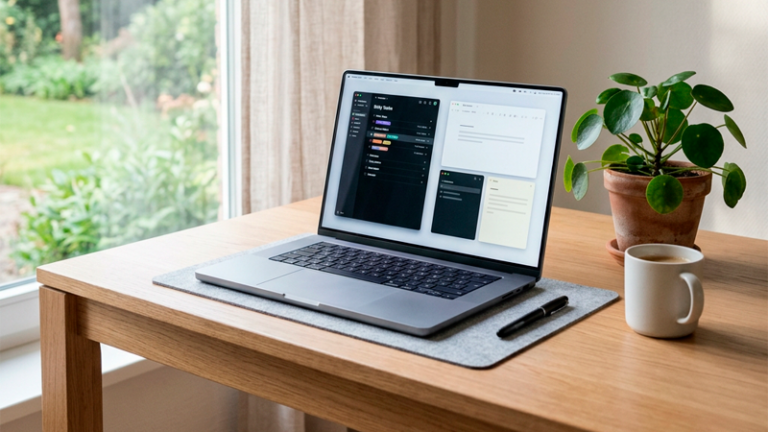
The best productivity setups usually look boring
Many high-performing remote workers eventually move toward simpler systems instead of more advanced ones.
That surprises people.
After years of experimenting, some professionals reduce their workflow to:
- One calendar
- One task manager
- One communication platform
- Cloud storage
- Minimal notifications
No complicated dashboards. No aggressive automation chains. No endless integrations.
The reason is practical. Simple systems reduce mental friction.
A remote employee managing projects across five apps may technically have more features available, but feature abundance often increases decision fatigue.
Every extra tool creates another place where information can disappear.
One of the most productive startup founders interviewed in a remote work survey reportedly handled nearly all planning through a basic text document and scheduled blocks on a calendar.
No advanced productivity framework. No complex digital stack.
Just consistency.
Remote work rewards clarity more than optimization
A lot of people approach productivity backwards.
They optimize systems before fixing habits.
Buying a new task management app feels productive immediately because it creates novelty and motivation. But after the excitement fades, old behaviors usually return.
That is why many remote workers cycle endlessly through productivity tools without becoming significantly more organized.
The real bottleneck is often unclear priorities, not missing software.
Workers who clearly define daily objectives usually perform better even with simpler setups. Meanwhile, people with overloaded digital systems often struggle despite using premium tools everywhere.
The long-term risk is not only financial.
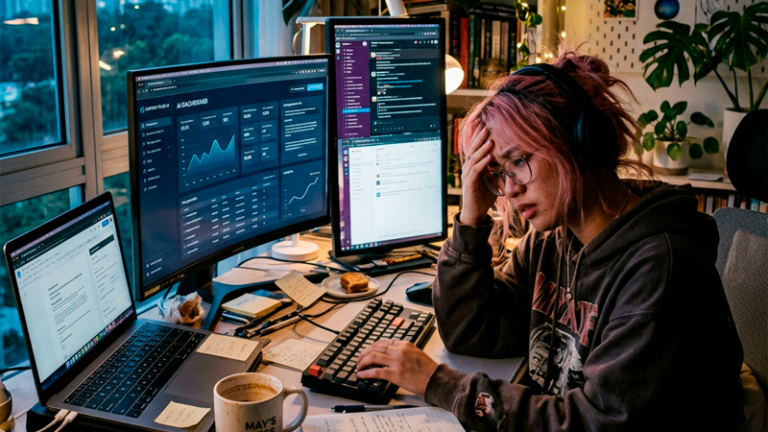
Digital overload slowly increases mental fatigue. Constant notifications, fragmented attention, subscription stress, and endless optimization can quietly turn remote work into an exhausting experience that never truly stops.
And once work starts following people into every hour of the day, productivity becomes much harder to recover than most app developers are willing to admit.