Third Places Are Quietly Vanishing Across American Cities
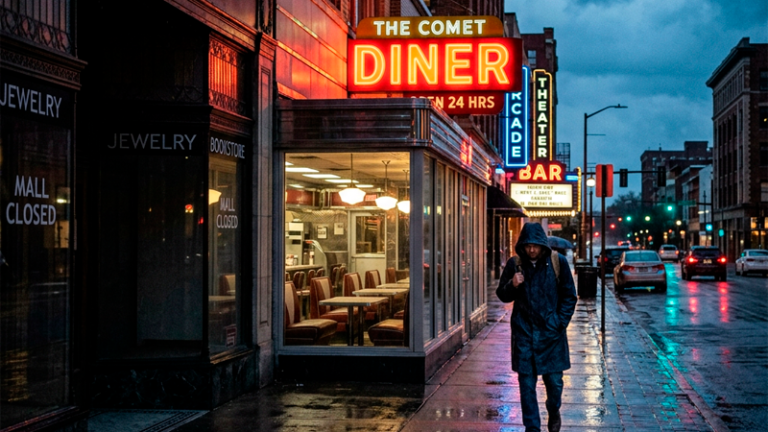
For decades, people had places they could go without spending much money. Local diners stayed open late. Independent bookstores had regular customers who knew each other by name. Small cafés allowed people to sit for hours with a coffee that cost two dollars. Teenagers wandered malls without being expected to buy something every fifteen minutes.
A lot of those places still exist physically, but the experience changed completely.
Many Americans started noticing that public life feels more isolated even when cities are more crowded than before. The reason is not only technology or social media. Part of the problem is financial pressure. Part is cultural change. And part comes from how modern businesses now calculate profitability.
The disappearance of “third places” — spaces outside home and work — is slowly changing how people socialize, date, relax, and even build friendships.
Most people only notice it after realizing they barely spend time anywhere that does not require constant spending.
Coffee shops became workplaces instead of gathering spaces
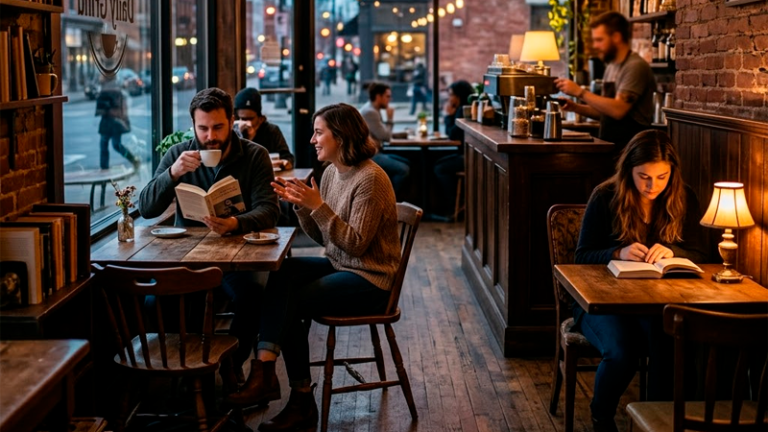
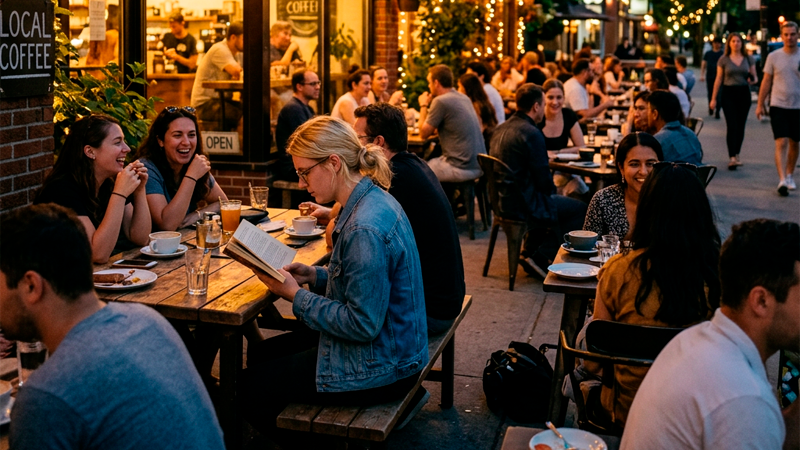
Walk into many coffee shops today and the atmosphere feels completely different from twenty years ago.
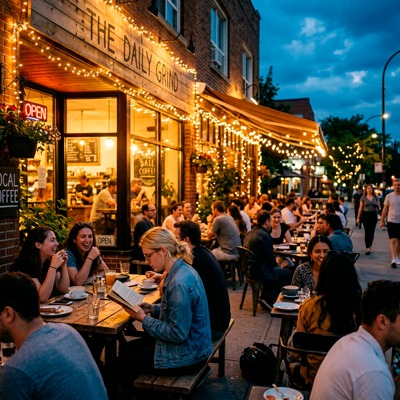
People are wearing headphones. Tables are covered with laptops. Some customers stay for six hours after ordering one drink. Others are attending Zoom meetings. Many cafés adapted their entire business model around remote workers instead of neighborhood social interaction.
That shift created a strange contradiction.
Coffee shops became more crowded while becoming less social at the same time.
A café owner in Chicago explained that customers now expect strong Wi-Fi, power outlets, quiet environments, and enough seating for long work sessions. The problem is that these customers often spend less money overall than traditional social groups.
One group chatting for an hour might spend $40 on drinks and food. One remote worker may occupy a table for half the day while spending $7 total.
To compensate, many cafés raised prices sharply.
A basic latte that cost around $3.50 in 2014 now regularly passes $7 in major U.S. cities once taxes and tips are included. For younger customers already struggling with rent and student debt, casual daily socializing became harder to justify financially.
That subtle change matters culturally because social habits follow affordability.
People stop gathering naturally when every interaction starts feeling expensive.
Shopping malls lost their original social purpose
American malls once functioned as informal community centers, especially for teenagers and middle-class families.
People walked around without strict goals. Friends met there after school. Couples spent entire evenings together without spending heavily. Even window shopping created entertainment.
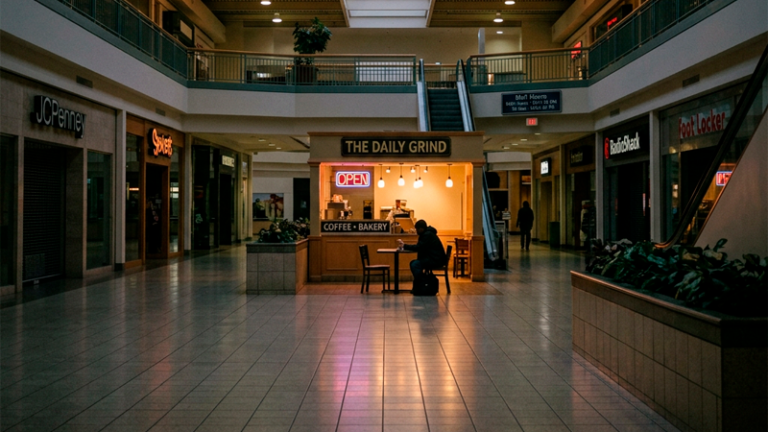
Now many malls feel either abandoned or aggressively commercialized.
Some locations introduced stricter security policies targeting teenagers. Others replaced seating areas with retail kiosks to maximize revenue per square foot. Food courts became more expensive while offering fewer independent businesses.
At the same time, online shopping eliminated one of the mall’s biggest social functions.
People no longer need to leave home to browse products casually.
The result is cultural rather than purely economic. Younger generations often have fewer spontaneous in-person interactions because fewer environments still encourage them naturally.
Many teenagers today socialize primarily through gaming platforms, Discord servers, or group chats instead of physical public spaces.
That shift affects communication habits more than older generations sometimes realize.
Spending hours interacting digitally creates very different social instincts than spending hours navigating public spaces with strangers.
The subscription economy changed everyday culture quietly
One overlooked reason public culture feels different today is the rise of subscription-based living.
Entertainment that once happened collectively now happens individually.
Movies became streaming platforms. Music became personalized playlists. Gyms require memberships. Coworking spaces replaced casual public workspaces. Even hobbies increasingly exist behind paywalls, premium tiers, or apps.
The average American now spends hundreds monthly on recurring services without noticing how fragmented those expenses become.
A 2025 consumer finance report estimated that many households underestimate their subscription spending by more than 40 percent because small charges feel invisible individually.
But culturally, subscriptions create another effect.
People spend more time inside controlled personal ecosystems and less time participating in unpredictable public environments.
Older forms of public culture depended heavily on accidental interaction.
Meeting someone randomly at an arcade, bookstore, skatepark, record store, or diner created experiences algorithms could not predict. Streaming platforms and personalized feeds reduced those moments significantly.
Convenience improved. Spontaneity declined.
Why younger generations are spending differently
A lot of criticism aimed at younger Americans ignores one important reality.
Socializing became dramatically more expensive compared to previous decades.
In many cities, a normal night out can easily cost over $120 between rideshares, drinks, food, parking, and tips. Even relatively basic activities now require noticeable budgeting.
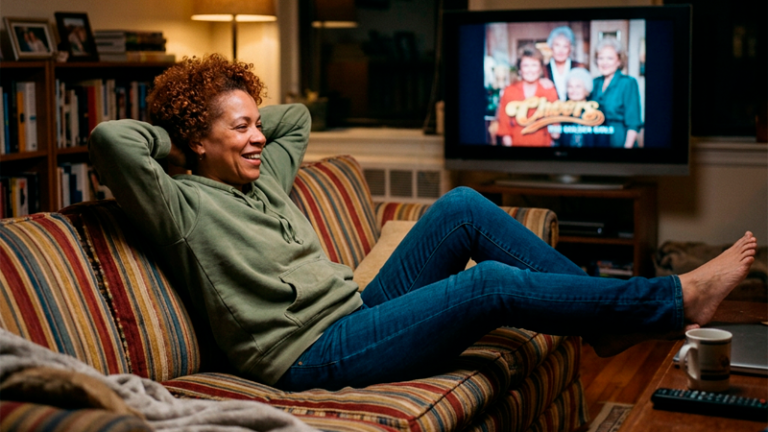
Because of that, younger people often prioritize smaller gatherings at home instead of traditional public nightlife.
That is not necessarily because they dislike social interaction. It is because the economics changed.
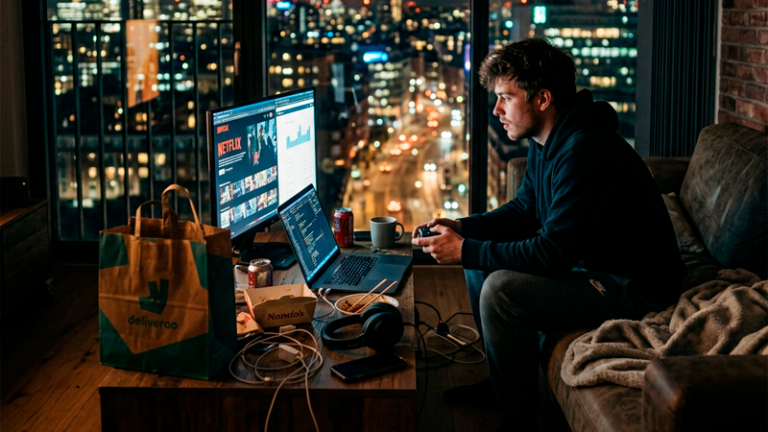
A group of friends ordering takeout and watching movies at someone’s apartment may spend a fraction of what one evening downtown would cost.
There is also growing exhaustion with performative spending culture online.
Some younger consumers became skeptical of constantly paying for experiences designed primarily for social media visibility rather than actual enjoyment.
Many people are quietly returning to cheaper hobbies like reading, cooking, hiking, house gatherings, and local events because those activities feel more sustainable financially and emotionally.
That shift rarely receives attention because it happens gradually rather than through obvious trends.
Small local businesses are struggling to survive cultural shifts
Independent businesses traditionally helped shape local culture. Small music venues, bookstores, cafés, art theaters, and family-owned restaurants created personality inside cities.
Many now operate under enormous financial pressure.
Commercial rent increased heavily in numerous urban areas. Insurance costs rose. Labor expenses climbed. Online competition intensified. Large chains gained more negotiating power with suppliers.
As a result, many local businesses started optimizing for survival instead of atmosphere.
Places that once encouraged lingering now need faster customer turnover. Some businesses removed seating entirely. Others shifted toward delivery apps because dine-in traffic became unpredictable.
One bookstore owner in Portland explained that events and community gatherings used to generate strong long-term loyalty. Now those same events sometimes lose money because staffing and operating costs increased too much.
Cultural spaces increasingly survive only if owners accept lower profits or personal financial sacrifice.
That reality changes entire neighborhoods over time.
Cities may still look vibrant visually while quietly losing the smaller places that once made social life feel natural.
Public culture becomes weaker when every space feels transactional
One reason people often describe modern cities as emotionally exhausting is because fewer environments feel neutral anymore.
Almost every public space now pushes spending aggressively.
QR code menus appear immediately. Tips are requested everywhere. Time limits exist on seating. Parking costs rise constantly. Event tickets become more expensive yearly.
People start calculating value continuously instead of relaxing socially.
That mental shift affects behavior more than many businesses realize.
When every outing feels optimized for extraction, people eventually reduce outings altogether.
Some cities are already noticing a small countertrend emerging. Libraries are expanding community events. Local parks are hosting more free activities. Independent cafés are experimenting with no-laptop hours to encourage conversation again.
Those ideas may seem small, but they point toward something important.
People still want places where they can exist without constant financial pressure attached to every interaction.
And cities that fail to preserve those spaces may eventually discover that economic growth alone does not create a strong culture if nobody feels comfortable participating in public life anymore.